

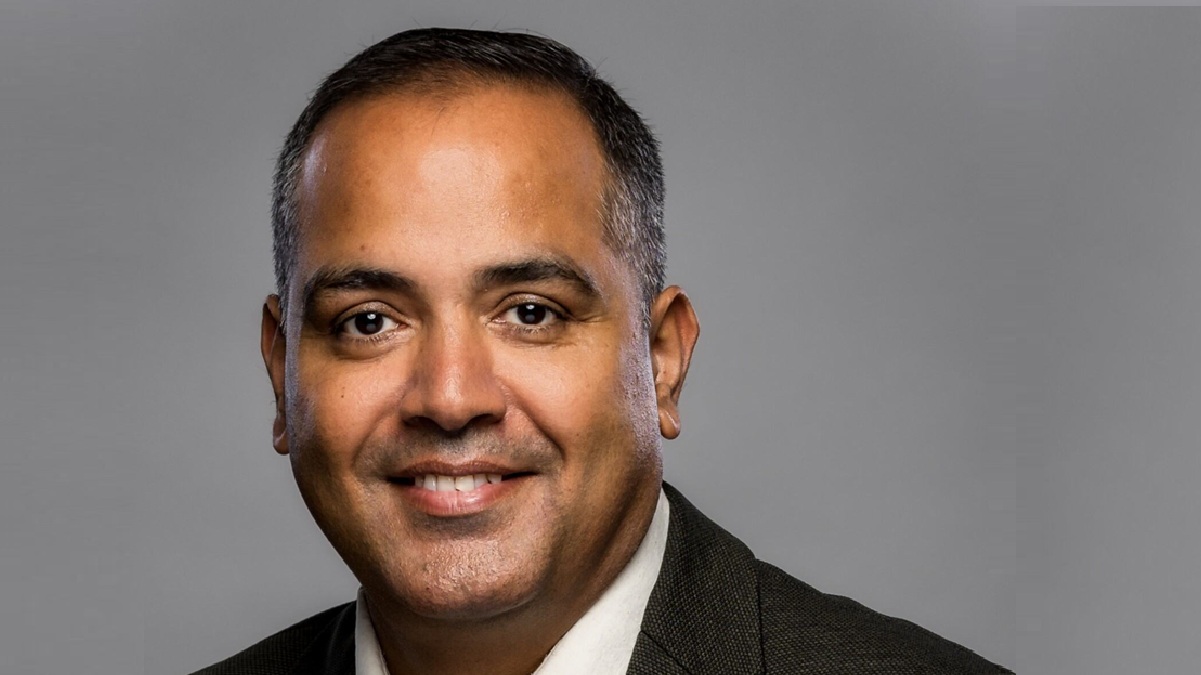
 Mohit Pandey, Head of Sales META at Seagate, outlines its AI‑ready storage strategy at Intersec, showcasing its new 32TB Mosaic drive, expanding across META, and preparing for 100TB capacities as AI, smart cities, and large‑scale surveillance rapidly grow.
How have you seen Intersec evolve over the years?
Intersec continues to evolve into one of the most influential and comprehensive security events globally. What makes it stand out is its ability to bring the entire security ecosystem together in a way very few exhibitions can. When you walk through the halls today, you see the full spectrum of the industry represented — from camera manufacturers and storage vendors like us, to VMS providers such as Milestone, server companies like Dell, and a wide range of integrators, distributors, and technology partners. Everyone who plays a role in shaping the future of security is present under one roof.
Over the years, the show has grown not only in size but in maturity. The conversations have become more strategic, the technologies more advanced, and the customer expectations more sophisticated. Intersec has transformed into a platform where real business decisions are made, where partnerships are strengthened, and where the industry collectively explores what’s next. The collaboration across the ecosystem becomes stronger each year, and the event now serves as a true barometer of where the security industry is heading — especially in a region that is rapidly adopting AI, cloud, and next‑generation surveillance technologies.
How do you find the footfall and the quality of discussions this year?
This year’s footfall is very strong, and the level of visitor seriousness is remarkable. We don’t experience even a few minutes of casual or non‑serious traffic — every conversation is purposeful, and the stand remains consistently busy throughout the day. What stands out is how well‑prepared visitors are. They arrive with specific questions, real‑world challenges, and a clear understanding of what they want to achieve with technology.
The discussions are deeper, more technical, and more forward‑looking than ever before. Customers are exploring AI‑driven use cases, large‑scale deployments, hybrid architectures, and long‑term storage strategies. This shift reflects the region’s growing maturity and its appetite for innovation. Year after year, the quality of engagement continues to rise, and this edition of Intersec reinforces that trend.
What products are you showcasing at the event, and how is the response?
This year, we are showcasing two major innovations: our new 32TB drive and the Juno SAN storage platform equipped with SAS drives. Both solutions address the growing demand for high‑capacity, high‑performance storage in surveillance environments.
The response has been exceptional. Customers immediately recognize the value of higher‑capacity drives, especially as camera resolutions increase and retention requirements become more stringent. Several visitors have already initiated discussions about placing immediate orders, which reflects strong confidence in our roadmap and our long‑term commitment to the surveillance industry. The interest validates the direction we are taking with Mosaic and our broader storage portfolio.
How has Seagate evolved to become a major player in the surveillance industry today?
Seagate’s evolution in the surveillance industry is rooted in long‑term innovation. A major milestone for us is the development of Mosaic, built on our HAMR technology — a breakthrough we have been working on for nearly two decades. Mosaic represents a new era of storage, enabling capacities that were previously unimaginable.
The launch of the 32TB Mosaic drive marks a significant leap forward. In large‑scale surveillance deployments — whether 500, 1,000, or even 2,000 cameras — capacity becomes a critical factor. Mosaic addresses this challenge by delivering higher density, better performance, and improved reliability. And this is just the beginning. We are already looking ahead to 40TB, 50TB, and ultimately 100TB drives within the next five years. This long‑term vision is what positions Seagate as a major player in the surveillance space.
AI is becoming central to surveillance. How is Seagate positioned in this space?
AI is no longer a buzzword — it is now embedded directly into camera chipsets, analytics platforms, and surveillance workflows. As AI workloads grow, storage becomes even more critical. With partners like Hanwha, we offer AI‑ready drives such as SkyHawk 8TB and above, designed specifically to handle the demands of AI‑driven video analytics.
Mosaic, backed by HAMR, plays a pivotal role in supporting these workloads. AI requires massive amounts of data, and without high‑capacity, high‑performance storage, AI simply cannot scale. Seagate is positioned at the heart of this transformation, ensuring that the infrastructure behind AI‑powered surveillance is robust, reliable, and future‑ready.
Is the market ready for large‑scale AI adoption?
Absolutely. AI adoption is not something the market is preparing for — it is already happening. The UAE, in particular, positions itself as a global AI hub, with initiatives such as the AI city in Abu Dhabi. The region’s investments in smart cities, intelligent infrastructure, and digital transformation accelerate AI adoption faster than in many other parts of the world.
AI is becoming part of daily life far sooner than people expect. Unlike past technologies that took decades to mature, AI evolves rapidly. Over the next five to ten years, we will see AI integrated into almost every aspect of security and beyond.
How do you see AI changing the nature of business and human interaction?
AI is set to reshape everything — from how businesses operate to how people interact with technology. If you compare it to the evolution from the telephone in 1848 to the smartphone in 2007, which took 140 years, AI will not follow that timeline. Its pace of innovation is exponential.
We already see early forms of AI in tools like Copilot. In the coming decade, traditional devices may disappear, replaced by more intuitive, AI‑driven interfaces. AI will redefine workflows, decision‑making, and even the way we think about productivity and communication.
What about quantum computing — how relevant does it become?
Quantum computing represents the ultimate form of AI, but it is still at least a decade away. Only a few countries, such as the US and China, are investing at the scale required. Once it matures, quantum computing will enable breakthroughs such as remote surgery, fully autonomous cities, and an integrated national computing infrastructure. It will eventually transform how the world operates, but it requires time, investment, and global readiness.
What are your plans for SSDs?
We remain a proud hard‑drive manufacturer. Hard drives are the backbone of AI — without them, AI cannot scale. We have no plans to move into SSDs; our focus stays firmly on HDD innovation.
Which new markets are you focusing on after the regional restructuring?
The META restructuring is designed as a long‑term strategy. Our focus is on deeper penetration across Africa and the GCC, with East Africa forming a key part of our expansion plans. Saudi Arabia remains the focal point for the region, while the UAE continues to be a major driver for our growth.
What growth expectations do you have for the region?
Growth is directly tied to supply availability. With adequate supply, achieving 30–50% growth is possible. Without it, even 1% becomes difficult. Historically, we always aimed for double‑digit growth across segments and countries, and this year is no different.